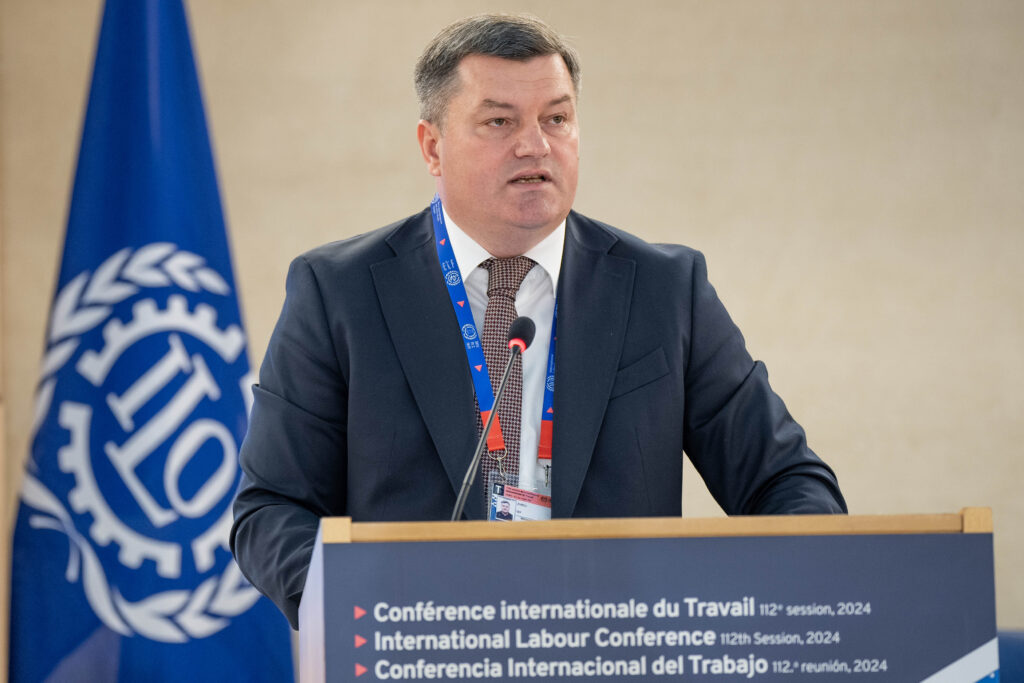
Following a complaint submitted by the National Trade Union Confederation of Moldova (CNSM) concerning insufficient protection against anti-union discrimination and interference in the activities of trade union organizations, the Committee on Freedom of Association of the International Labour Organization (ILO) examined case no. 3483 (Republic of Moldova).
The ILO Committee on Freedom of Association recently published a report stating that protection against anti-union discrimination and interference is insufficient in the Republic of Moldova, both legislatively and in practice, and that the authorities have not demonstrated a genuine willingness to combat these phenomena.
It should be noted that the CNSM had previously informed the ILO of serious interference in trade union activities by the administration of the National Centre for Pre-Hospital Emergency Medical Assistance — resulting in the dissolution of the existing union within the institution and the establishment of a new trade union under the direct control of the institution’s administration.
CNSM reported that the employer had resorted to intimidating all workers and union members, forcing them to sign standardized resignation forms. Employer representatives collected 3,826 such applications in a single day (out of a total workforce of 4,090).
At the same time, the Confederation drew attention to the insufficient legal protection of trade union leaders, including as a result of the repeal of guarantees in the Labour Code. They called for the legislative framework and sanctions to be strengthened to ensure full compliance with ILO Conventions.
Following an examination of the complaint submitted by the CNSM, the ILO Committee on Freedom of Association reiterated in its findings that employers must not interfere in the internal affairs of trade unions. The Committee stressed that any form of coercion forcing workers to renounce union membership or join parallel union structures constitutes a serious violation of international standards (ILO Convention No. 98, 1949, on the Application of the Principles of the Right to Organize and to Bargain Collectively).
The report states: “The Committee emphasizes that managerial staff have the right to establish their own associations to defend their interests, which may differ from those of non-managerial workers. However, the Committee recalls that employer intervention to promote the establishment of a parallel union constitutes interference in the functioning of a workers’ association, which is prohibited under Article 2 of Convention No. 98.”
The Committee also notes that anti-union discrimination, including the dismissal or prejudice of employees for trade union activities, is one of the most serious violations of freedom of association.
“The Committee considers that the Government’s role with regard to anti-union discrimination and interference is not limited to mediation and conciliation. Where appropriate, it should also include investigation and law enforcement to ensure effective protection against such acts, identify and remedy them, punish those responsible and prevent their recurrence”, the report notes.
The ILO Committee on Freedom of Association recommends completing the process of amending the Contravention Code without delay in order to strengthen the system of sanctions for anti-union interference and discrimination, ensuring that the sanctions are sufficiently comprehensive and dissuasive.
The Committee calls on the government to take the necessary measures to ensure that specific allegations of anti-union discrimination against members and leaders of the primary trade union are examined promptly so that, where appropriate, the applied remedies are genuinely effective.
At the same time, the Committee requests that the government equip the labour inspectorate with all the necessary tools to guarantee adequate protection against anti-union discrimination and interference in practice.