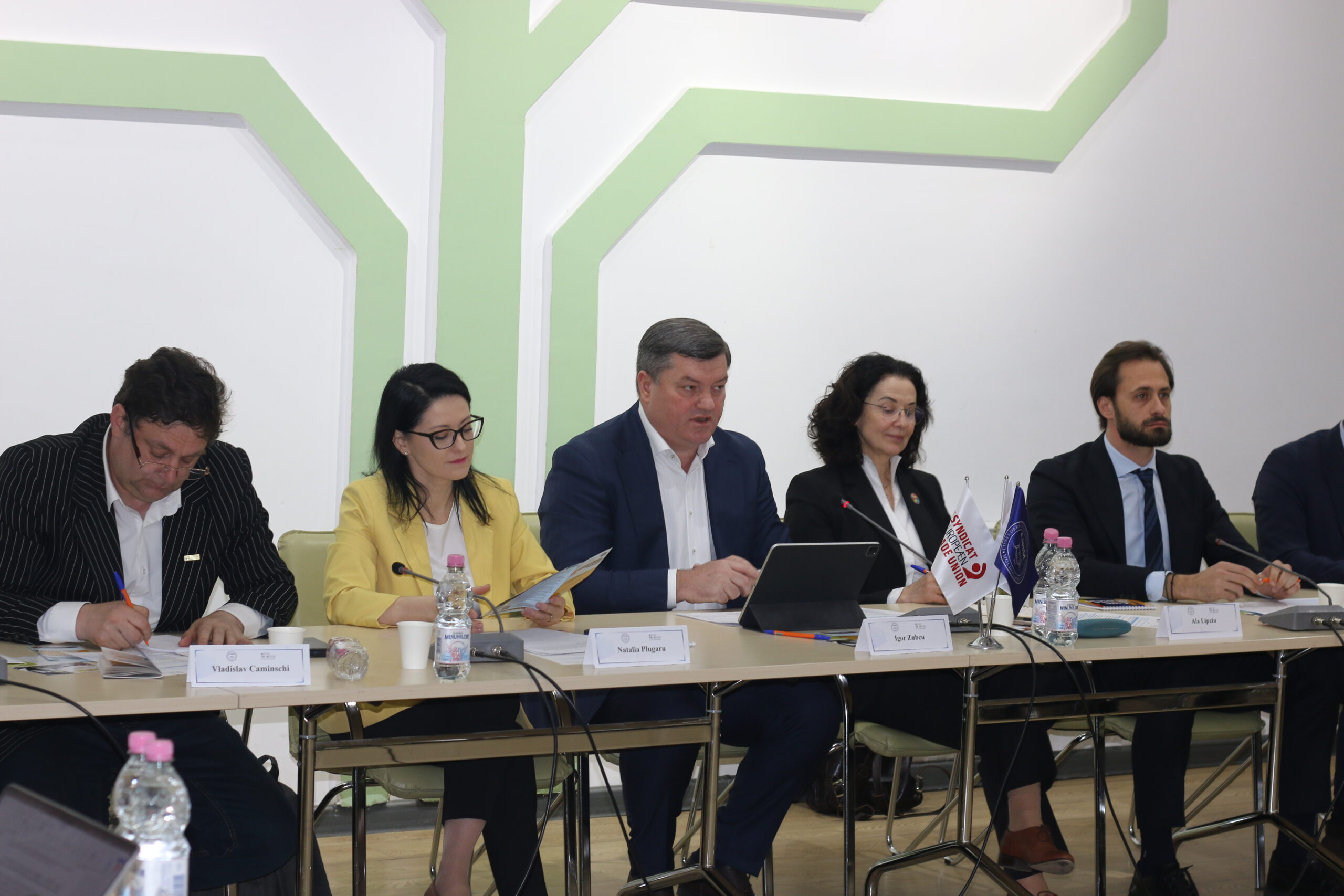
On the occasion of the World Day for Safety and Health at Work, marked annually on April 28, a roundtable titled “The Role of Social Partners in Ensuring a Healthy Psychosocial Work Environment” was held at the Labour Institute. The event was organized by the National Trade Union Confederation (CNSM) within the project “Protecting Workers’ Rights in Moldova,” with the support of the Swedish organization Union to Union.
The theme for 2026, established by the International Labour Organization (ILO) — “Ensuring a Healthy Psychosocial Work Environment” — highlights an increasingly evident reality: stress, burnout, and job insecurity are affecting both employees’ well-being and organizational performance.
The event brought together representatives of public authorities, social partners, and field experts, providing a platform for dialogue aimed at:
- analyzing current challenges related to the psychosocial work environment,
- identifying effective solutions for preventing and managing psychosocial risks,
- promoting a healthy and sustainable workplace.
The agenda addressed topics such as mental health and well-being at work, the role of psychologists in organizations, occupational risk assessment, and global trends in psychosocial work environments.
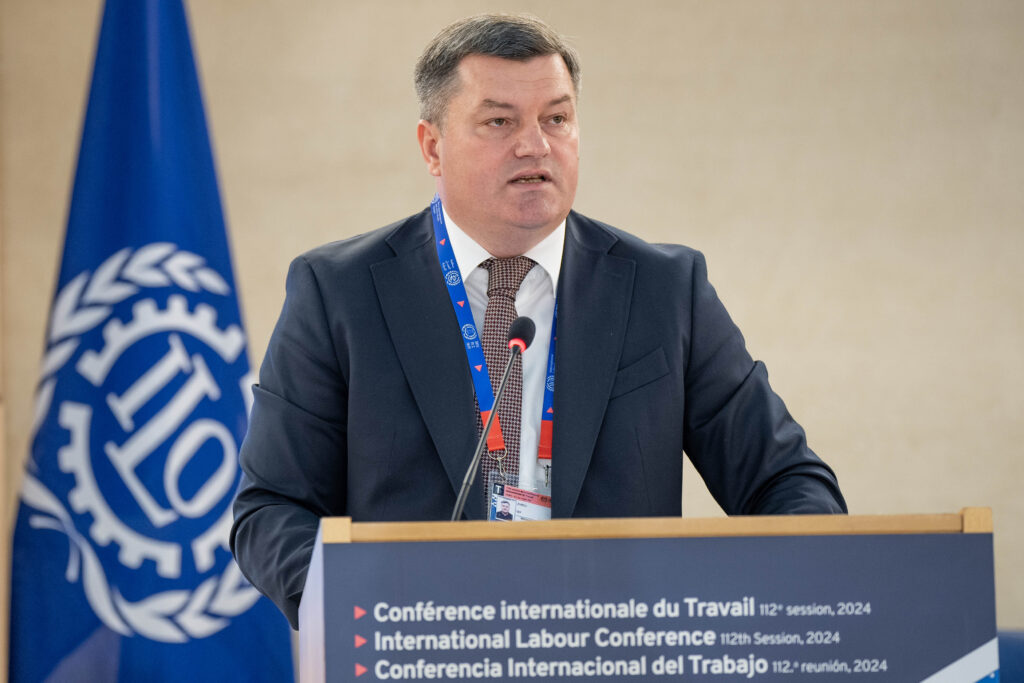
Igor Zubcu, President of the CNSM, emphasized that approaches to occupational safety and health have evolved significantly, increasingly incorporating the psychosocial dimension in the context of economic transformation, digitalization, and intensified work pace. He highlighted those risks such as chronic stress, burnout, excessive working hours, and workplace harassment affect millions of employees worldwide.
He further stressed that these risks are not merely individual issues but systemic challenges with significant economic impact, noting that inaction is more costly than investing in prevention. Igor Zubcu also pointed to the phenomenon of “presenteeism,” where employees are physically present but mentally exhausted, increasing the risk of workplace accidents.
At the same time, he underscored the need to strengthen the capacity of the State Labour Inspectorate to respond to emerging challenges and ensure effective implementation of European directives. He also reiterated the importance of social dialogue and collective bargaining agreements in promoting concrete measures such as the right to disconnect, workload limitations, and access to psychological support.
Welcome messages were delivered by representatives of national and international institutions, including the ILO, the Ministry of Labour and Social Protection, the National Confederation of Employers, the Ombudsman’s Office, the State Labour Inspectorate, and the National Agency for Public Health.
During two panel discussions, experts addressed key aspects of workplace mental health and the role of psychologists in organizational settings, offering practical insights and solutions.
Sergiu Sainciuc, Vice President of CNSM, presented the draft national-level collective agreement on the approval of a Practical Guide for Workplace Risk Assessment, designed especially to support small and medium-sized enterprises in identifying and preventing occupational hazards.
In addition, ILO experts presented key findings from a global report indicating that psychosocial risks contribute to over 840,000 deaths annually worldwide and are associated with a higher incidence of cardiovascular diseases and mental disorders. According to estimates, 35% of employees globally work more than 48 hours per week, while long working hours significantly increase the risk of serious health conditions.
Workplace harassment remains a major concern, with approximately 23% of employees reporting having experienced some form of violence or harassment during their professional lives, psychological violence being the most common.
The event reaffirmed the commitment of social partners to strengthen joint efforts in creating a safe, healthy, and balanced work environment.
On the same day, a model Occupational Safety and Health training room was inaugurated at the Labour Institute. This modern facility is equipped with demonstration materials and practical tools to support the training of specialists and workers’ representatives, promoting a culture of prevention.
According to official statistics, 603 workplace accidents were recorded in 2025, including 19 fatal cases. The most affected sectors were industry, trade, public administration, transport, construction, and healthcare. The average duration of work incapacity per injured person was 34 days, while employer-related costs exceeded 6.6 million lei.
On this occasion, the International Trade Union Confederation called for urgent action to address the global crisis of psychosocial risks, emphasizing that these risks often stem from managerial and governmental decisions.
The World Day for Safety and Health at Work aims to promote the prevention of occupational accidents and diseases and to commemorate victims, reaffirming employers’ responsibility to ensure safe, healthy, and decent working conditions.